
Living Anatomy with Dr. Jean-Claude Guimberteau
Living Anatomy with Dr. Jean-Claude Guimberteau
This course includes
The instructors
Overview
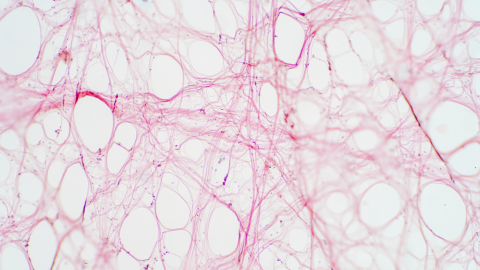
This course provides an extraordinary, inside look at the living architecture of the human body, featuring groundbreaking endoscopic video observations by French reconstructive hand surgeon Dr. Jean-Claude Guimberteau, presented alongside insights from physiotherapist Esther de Ru. Challenging the traditional anatomical teaching that tissues glide in distinct, separate layers, this presentation reveals a highly dynamic, fluid, and continuous fibrillar network extending from the skin surface down to the cellular level.
Building upon initial fascial concepts, the course dives into the continuous fibrillar network that challenges traditional cadaveric anatomy. Dr. Guimberteau provides rare surgical insights into how the body's connective tissue dynamically adapts to movement, mechanical constraint, age, and neurological conditions like spasticity. Participants will explore the chaotic yet highly efficient micro-anatomy of connective tissue, understanding how these microvacuoles and collagen networks facilitate movement, adapt to mechanical stress, and maintain structural integrity.
Through the integration of both parts of this course, clinicians will gain a comprehensive framework for reconceptualizing the living body as one that moves away from static, layered anatomical models and toward an appreciation of the fluid, interconnected, and self-regulating nature of fascial tissue in health, pathology, and recovery.
Note: Part 1 of this course has some significant audio difficulties. Dr. Guimberteau also has a strong accent. Closed captions are available in the course to assist with understanding.
Learning Objectives
Upon completion of this course, participants will be able to:
- Understand the structural properties and functional behaviours of the continuous fibrillar network in living human tissue.
- Differentiate the in vivo sliding system of microvacuoles from traditional anatomical models of distinct sliding layers.
- Define the anatomical and functional differences between microvacuoles and megavacuoles within the living fascial network.
- Identify how connective tissue adaptations manifest under mechanical stress, including the transformation of microvacuoles into megavacuoles in regions like the carpal tunnel.
- Evaluate the evidence against the existence of "skin ligaments" as mechanical anchors and reconceptualise retinacula cutis as flexible fibrous networks.
- Recognize the physiological differences in connective tissue structures across different age demographics, including the effects of aging, spasticity, and chronic mechanical constraint.
- Apply knowledge of living fascial anatomy to inform more evidence-based manual therapy, rehabilitation, and post-surgical care approaches.
Audience
This course is designed for physiotherapists, occupational therapists, physical therapy students, orthopaedic professionals, manual therapists, massage therapists, and allied healthcare providers who are interested in fascia, tissue mechanics, and living anatomy. The content is relevant to both clinical practitioners seeking to deepen their understanding of connective tissue behaviour and educators looking to update their anatomical teaching frameworks.
Whether you approach the body primarily through movement, manual therapy, surgery, or rehabilitation, this course will challenge and expand your conceptual model of how human tissues truly function in a living, dynamic state.
Why This Course Matters
Most anatomical studies on connective tissue and fascia are conducted on cadavers, which do not accurately reflect the sliding, gliding, and tensioned properties of living tissue. By viewing the true extracellular matrix in a living body, clinicians can drastically reshape their conceptual understanding of mobility, tissue release, and physical rehabilitation, leading to more informed, evidence-based manual therapy interventions.
Most rehabilitative therapies are grounded in anatomical models derived from deceased, static tissue. Understanding the fluid, continuous, and adaptable nature of living fascia allows clinicians to reconceptualise how movement therapies, manual techniques, and post-surgical rehabilitation impact the intercellular spaces and overall mobility of their patients. Key clinical concepts, such as the role of microvacuoles as micro-hydraulic buffers, the non-existence of discrete sliding layers, and the impact of systemic conditions on tissue quality, directly translate into how we plan and deliver care.
This course also addresses the often-overlooked variability of tissue across age groups and health conditions, reminding clinicians that one treatment approach cannot fit all bodies. The insights offered by Dr. Guimberteau represent a paradigm shift that, when embraced, can elevate the quality and intention behind every manual or movement-based intervention.
Related Learning
The instructors

PT, OMT, PPT
Esther de Ru is a physiotherapist from the Netherlands whose passion and energy for all things related to pediatrics is stunning. Maybe best known for her work in elastic therapeutic taping, she is keenly interested in skin, our outer brain, using skin stretch and massage to enhance movement and address dysfunction. Her other passion is scoliosis management. She is certified in NDT Bobath, NDT/Mueller, pre-logopedia, Vojta, Sports, Orthopedic Manual Therapy, P.N.F., Bugnet, Sensory Motor Therapy & Motor Remedial Teaching. She developed the Skin Approach to Taping method and she has published on this topic.
As past chair of the Committee Practice of the IOPTP (International Organisation of Physical Therapists in Paediatrics) and international instructor and author, Esther emphasizes the need to work very hands-on in our profession.
Semi-retired, Esther travelled the world teaching and sharing her knowledge as a true clinician who values not only the evidence base, but the patient's experience and the intuitive wisdom that comes with real work in the real world. She has gained her experience working in four European countries. She is a respected international speaker, and provides mentoring to therapists world wide through the Clinical Excellence Online CEO WiredOn program.
MD
Dr. Jean-Claude Guimberteau is a pioneering reconstructive hand surgeon from France and the creator behind Endovivo Productions. Utilizing advanced endoscopy and microscopy during surgical procedures, he has documented the sliding systems of the body's connective tissues, fundamentally shifting our understanding of living human fascial anatomy. His visual research has made the invisible visible — revealing a fractal, self-organizing collagen network that no cadaver study could fully capture.
Material included in this course
-
Living Anatomy with Dr. Jean-Claude Guimberteau
-
Part 1
-
Part 2
-
Summary and Key Insights
-
References
-
Feedback
-
Additional Resources
-
Strolling under the Skin
-
Additional Resources
-
Knowledge Check and Evaluation
-
Knowledge Check
-
Course evaluation
Patient education included in this course
-
Fascia & The Mystery of Chronic Pain
Is a certificate of completion included with this course?
Once you have completed the course, a certificate of completion (including learning hours and course information) will be generated. You can download this certificate at any time. To learn more about course certificates on Embodia please visit this guide.
This can be used for continuing education credits, depending on your professional college or association. If this course has been approved for CEUs in specific jurisdictions, it will be noted on the course page and CEU information may be added to your course certificate. Please read this guide for more information.
Are closed captions available for the video lectures?
Yes, closed captions are available for all video content in this course. We strongly recommend enabling them, as Part 1 of the course contains some original audio difficulties and Dr. Guimberteau presents with a strong French accent. Captions ensure you won't miss any of the key concepts or endoscopic descriptions.
Closed captions are available in English, French, and Spanish.
What makes the anatomical perspective in this course different from traditional anatomy courses?
Unlike standard courses based on static, cadaveric models that teach tissues as separate, gliding layers, this presentation uses live endoscopic video to demonstrate the continuous, dynamic fibrillar network. By using a tourniquet during surgical procedures to minimize excessive bleeding, he was able to observe and document how living facial tissue, muscles, tendons, and blood vessels slide and glide in real time.
Has this course been approved for CEUs (Continuing Education Units) for Physical Therapists and Physical Therapy Assistants in the US?
Yes, Embodia is a rule-approved CE provider of the PT Board of Florida (# 50-54793), a licensed CE sponsor of physical therapy continuing education by the Illinois Department of Financial & Professional Regulation (IDFPR #216.000415), an approved provider of continuing education by APTA Massachusetts, an approved provider of the Oklahoma Board of Medical Licensure & Supervision - Physical Therapy (#50-54793), and an approved provider of continuing education for Physical Therapists and Physical Therapist Assistants in California (CA) by CEUapproval.com, a recognized approval agency of the Physical Therapy Board of CA.
Courses approved by other state boards in the following jurisdictions are likely accepted for licensure credit based on the state regulation:
AL | AK | AR | CO | CT | DE | GA | HI | ID | IL | IN | IA | KS | KY | ME | MA | MI | MO | MT | NE | NH | NC | ND | OK | OR | PA | RI | SC | SD | UT | VT | VA | VI | WA | WI | WY
Please reach out to your state licensing board to confirm. If you have a specific question about CEU approval for this course in your state, please direct your inquiry to info@ceuapproval.com
The following states are not pre-approved: AZ, DC, LA, MD, MN, MS, NM, NV, NY, NJ, OH, TX, WV
Participants licensed in states not pre-approved may file for individual approval using the instructions on this document.
I'm a PT/PTA in the US. How many CEUs has this course been approved for?
This course has been approved for 0.75 CEUs (Continuing Education Units) for Physical Therapists and Physical Therapy Assistants in the US. Please see the FAQ 'Has this course been approved for CEUs (Continuing Education Units) for Physical Therapists and Physical Therapy Assistants in the US?' for a detailed list of the approved states. In order for your US jurisdiction information to appear on your course certificate, you must complete your jurisdiction information on your Embodia profile as per this guide.