
Assessment of Complex Gait and Motor Patterning in Pediatrics
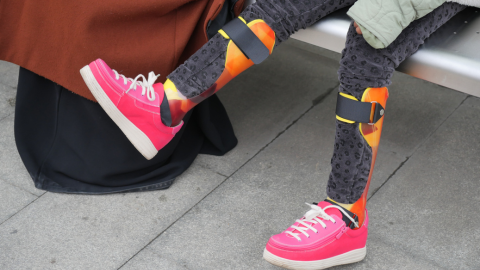
Assessment of Complex Gait and Motor Patterning in Pediatrics
This course includes
The instructors
Overview
Complex Gait and Motor Patterning in Pediatrics is a comprehensive introduction to the principles, assessment frameworks, and clinical applications of pediatric gait analysis. Presented by Karen Davies, MSc, PT, from the Motion Lab at Sunny Hill Health Centre at BC Children’s Hospital, this course explores how to systematically evaluate and manage complex mobility challenges in children and adolescents.
Participants will develop a strong understanding of both observational and computerized gait analysis, physical and functional examination measures, and evidence-informed intervention design. The course explains the prerequisites of typical gait, structured observation techniques, and how to utilize clinical data to address multi-joint deviations, motor patterning, and evaluate pre- and post-intervention outcomes.
Through practical case studies and clinical reasoning, practitioners will be introduced to the concepts of:
-
Incorporating functional scales (GMFCS, FMS) and physical exam measures into routine assessments.
-
Distinguishing the clinical utility of qualitative observational analysis versus quantitative 3-dimensional computerized gait analysis (CGA).
-
Building a practical toolkit for structured video observation and systematic gait evaluation.
-
Utilizing gait data to guide decision-making for interventions like orthoses, casting, and surgical planning.
Pediatric gait assessment is presented not just as a diagnostic tool, but as a goal-oriented framework that addresses everything from activities of daily living and independence to body image, pain management, and long-term functional recovery.
Learning Objectives
By the end of this course, participants will be able to:
-
Explain the prerequisites of typical gait, including stance stability, foot clearance, and energy conservation.
-
Apply practical strategies to incorporate functional scales and physical exam measurements in the assessment of pathological gait in children and adolescents.
-
Distinguish between scenarios where specialized 3D computerized gait analysis (CGA) is indicated versus when observational gait analysis is appropriate.
-
Utilize gait analysis data to assess common gait pathologies in children and formulate individualized management strategies (including bracing, tone management, or surgical referrals).
-
Apply goal-oriented frameworks, such as the Gait Outcomes Assessment List (GOAL), to address patient-specific mobility and lifestyle needs.
-
Set up and execute high-quality video gait observations using accessible technology and standardize findings using rating scales like the EVGS.
Audience
This course is designed for healthcare professionals who manage or assess pediatric mobility and gait patterns in clinical practice, including:
-
Physical Therapists
-
Occupational Therapists
-
Orthotists and Prosthetists
-
Kinesiologists
-
Rehabilitation Assistants
-
Pediatricians and referring physicians
Both clinicians working in community settings and those managing complex pediatric cases will benefit from building a stronger observational foundation.
Why This Course Matters
Pediatric gait analysis offers a vital framework for understanding and managing mobility challenges in growing children, enabling targeted interventions that improve independence, function, and quality of life.
Evidence strongly supports the use of 3-D CGA in pre-operative assessments. It provides objective data, has been shown to successfully reduce the number of surgeries in children, and results in better long-term management of children with ambulation challenges. However, because there are a limited number of specialized gait and motion labs in Canada, it is essential for community therapists and clinicians to be highly proficient in observational gait analysis and thorough physical examination.
A systematic approach allows clinicians to isolate specific deficits, such as equinus contractures or internal tibial torsion, and directly map them to functional impairments like tripping or fatigue. For patients and their families, a comprehensive gait assessment ensures that interventions align with their specific goals. For clinicians, it provides objective, reproducible data to evaluate the efficacy of interventions over time and facilitates seamless collaboration across community healthcare teams.
About the Presenter
Karen Davies, MSc, PT
Karen Davies started her professional practice at BC Children’s Hospital in 1999, rotating in a new graduate position every six months through cardiology, general respirology, adolescent care, intensive care, oncology, and outpatients. Following this, she volunteered in a polio clinic in India for six months, training community rehabilitation workers in remote locations. She then worked at GF Strong Rehabilitation Centre in the neuromusculoskeletal, acquired brain injury, and spinal cord injury programs.
She returned to pediatrics in 2004 in the Acute Rehabilitation program at Sunny Hill Health Centre at BC Children’s Hospital. After spending time on the Positioning and Mobility team and providing early intervention and school therapy outreach services for North Vancouver Island, she joined the Motion Lab (previously Gait Lab) in 2007. In the Motion Lab, she has served as a knowledge broker, worked as a research assistant for a multi-centre research project, and completed her MSc degree examining the long-term outcomes of idiopathic toe walkers. She is currently leading a 3-year pilot project to determine the feasibility of implementing a community-based rowing program for adolescents with cerebral palsy.
The instructors
The Paediatric Division is a special interest group within the Canadian Physiotherapy Association. Our membership consists of clinicians from all practice settings, students, educators, researchers, physiotherapy assistants and administrators all of whom have a passion for promoting participation and enhancing the lives of children and their families. We are dedicated to provide resources and information for paediatric patients and their families to promote participation and function independence in all aspects of life.
Paediatric physiotherapists employ clinical expertise in the early detection of health problems, treatment, education and management of congenital, developmental, neuromuscular, skeletal, cardiorespiratory or acquired disorders/diseases. Paediatric physiotherapists work with children of all ages, from infants through young adulthood to promote participation and functional independence. Paediatric physiotherapists have a unique role in that they not only work with the child, but also their families in the context of their daily home, school and recreational environment.
Paediatric physiotherapists use validated outcome measures to assess the level of strength, flexibility, gross-, and fine-motor coordination and overall functional capabilities to determine participation limitations or restrictions as a result of injury, disease or disability.
Through analysis of objective assessment findings, the paediatric physiotherapist uses evidence-based treatment interventions specifically tailored to the client and their family's goals. Treatment interventions focus on improving gross and fine motor skills, balance and coordination, strength and endurance, as well as cognitive and sensory processing/integration.
Material included in this course
-
Course Materials
-
Welcome and Slides
-
Understanding Pediatric Gait Complexity
-
An Overview of Pediatric Gait Complexity
-
Case Study 1: Persistent Toe Walking
-
Case Study 2: Spastic Diplegia with Intoeing
-
Technology in Gait Assessment
-
Summary and Question Period
-
Summary and Key Insights
-
Knowledge Check
-
Feedback
Patient education included in this course
-
Pediatric Gait Assessment: What to expect
-
Pediatrics: Typical Development Children
-
Pediatrics: Typical Development Infants
I'm a member of the Canadian Physiotherapy Association (CPA). What are the discounts available to CPA Members on Embodia?
As part of our partnership with the CPA, we offer its members discounts on courses and Embodia Memberships. Learn more about the partnership on this page.
In order for the discount to be applied, you first need to authenticate your CPA membership. This is an important step as this is how Embodia 'knows' that you are a CPA member.
To authenticate as a CPA member, please visit this page on the CPA portal.
Please note that your email address on your CPA account must match your email address on Embodia. If needed, you can update your information on Embodia as outlined in this guide.
Is a certificate of completion included with this course?
Once you have completed the course, a certificate of completion (including learning hours and course information) will be generated. You can download this certificate at any time. To learn more about course certificates on Embodia please visit this guide.
This can be used for continuing education credits, depending on your professional college or association. If this course has been approved for CEUs in specific jurisdictions, it will be noted on the course page and CEU information may be added to your course certificate. Please read this guide for more information.
This course has exercises. Can I prescribe them to my patients?
Yes, exercises included in courses or resource packages on Embodia can be prescribed directly through the Embodia platform. A Tier 2 or 3 Membership is required to prescribe exercises. These memberships include a range of other features. You can learn about home exercise programs (HEP) on Embodia here, and about memberships on Embodia here.